Dolby Atmos: The Quiet Revolution Reshaping Music Production
- by Peter Natale
- From The Producer's Desk
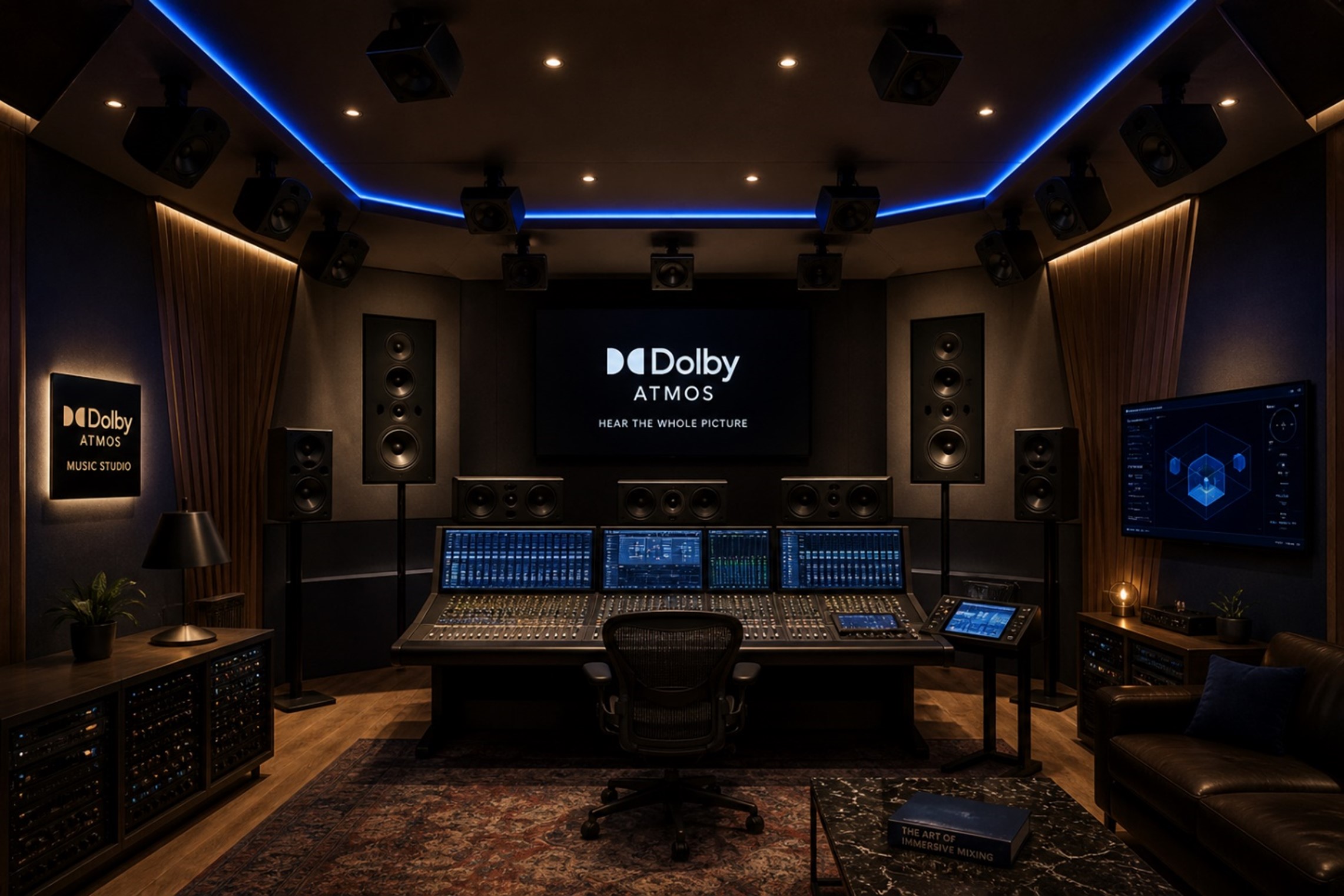
For the past couple of years, the conversation in music production has been dominated by AI, AI beatmakers, AI mastering, AI vocals. But while everyone’s been looking forward, something equally transformative has been happening all around us: immersive audio, led by Dolby Atmos. This isn’t just another trend or a technical upgrade, it’s a fundamental shift in how music is created, experienced, and delivered to listeners.
What Is Dolby Atmos (for Music)?
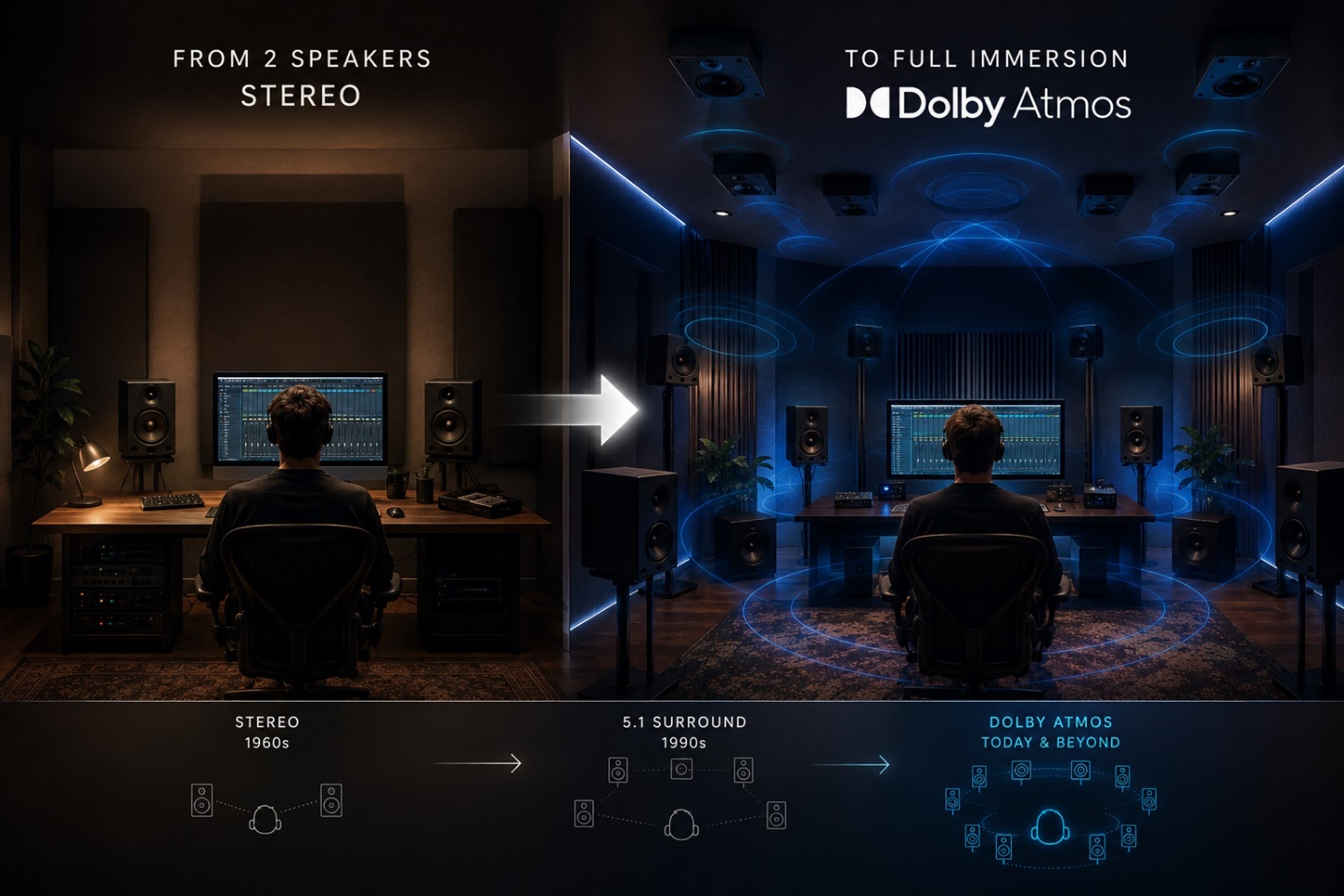
Traditionally, music has lived in a stereo world, a left and a right channel where every sound is carefully placed somewhere between two speakers. For decades, producers have mastered the art of creating width, depth, and balance within this limitation. But Dolby Atmos breaks that framework entirely by introducing a three-dimensional mixing environment.
Instead of assigning sounds to fixed channels, Atmos allows producers to treat elements as individual “objects” that can be positioned anywhere in a virtual 3D space. This means a vocal can sit directly in front of you, a synth pad can float above you, and percussion can move dynamically around you. The experience becomes less like listening to a recording and more like being placed inside the music itself. It’s the difference between observing a painting and stepping into a world.
How Atmos Is Changing Music
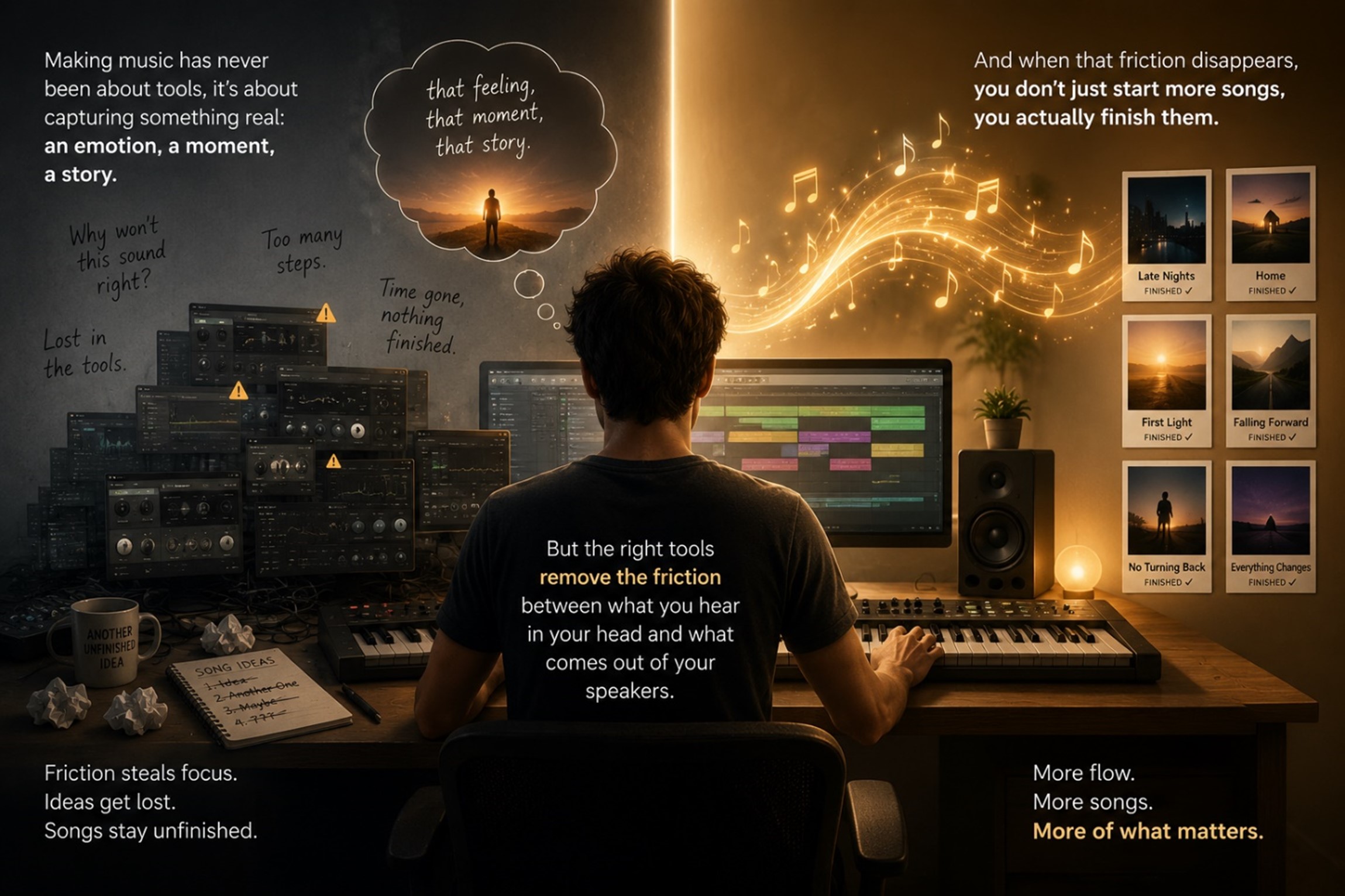
One of the most profound impacts of Atmos is that music is becoming more experiential. Artists are no longer limited to crafting a song that sounds good, they can now design how a song feels spatially. Subtle background elements can be elevated literally into the space above the listener, while ad-libs and effects can travel around the head, creating motion and immersion that was previously impossible. This opens the door for storytelling in ways that go beyond lyrics and melody.
At the same time, major streaming platforms like Apple Music, Amazon Music, and TIDAL are actively pushing Atmos content to the forefront. These platforms aren’t just supporting the format, they’re promoting it, curating playlists around it, and encouraging listeners to experience music in this new way. For artists and producers, this creates a rare opportunity: early adoption isn’t just about creativity, it’s about visibility.
Because the barrier to entry is still relatively high in terms of knowledge, not everyone is doing it yet. That’s what makes it such a powerful differentiator. Producers who can confidently deliver Atmos mixes are immediately more valuable, more future-facing, and more appealing to artists looking to stand out in a crowded digital landscape.
Can Bedroom Producers Actually Use Dolby Atmos?
At first glance, Dolby Atmos might seem like something reserved for high-end studios with elaborate speaker setups and large budgets. And while that was true in the early days, the landscape has changed dramatically. Today, bedroom producers can absolutely get started with Atmos, if they approach it the right way.
The key shift is accessibility. Advances in software and headphone-based monitoring mean that you no longer need a multi-speaker room to begin experimenting with immersive audio. What you do need, however, is an understanding that this is not just a technical upgrade, it’s a creative and conceptual one. Atmos asks you to think differently about sound from the ground up.
Getting Started with Dolby Atmos at Home
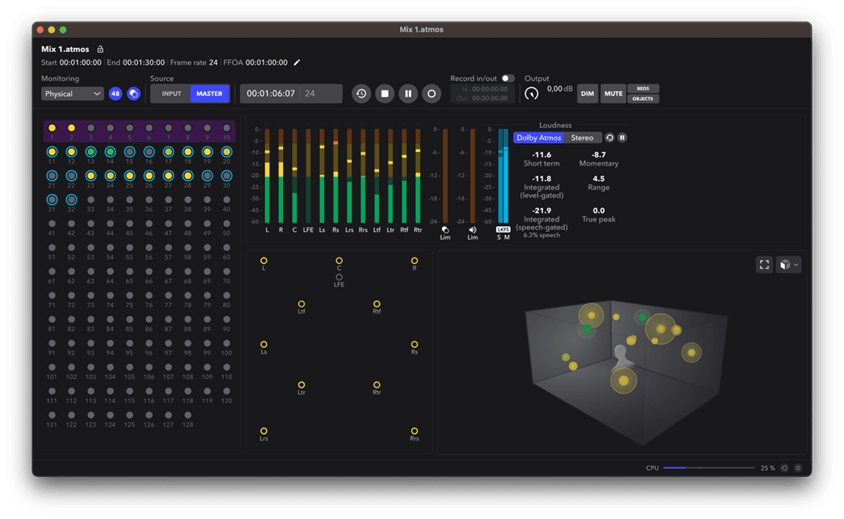
The first step into Atmos is choosing a digital audio workstation that supports immersive workflows. Software like Logic Pro has made this particularly approachable by integrating Dolby Atmos tools directly into the environment, allowing producers to begin experimenting without needing a complex external setup. More advanced platforms like Pro Tools and Nuendo offer deeper control, but for most beginners, simplicity is key.
Equally important is the concept of the renderer, which acts as the bridge between your 3D mix and the listener’s playback system. The renderer interprets where each sound exists in space and translates that into something that works across headphones, soundbars, or full speaker systems. Without it, your mix has no way of being properly experienced.
Perhaps the most surprising part for many producers is that you can begin mixing in Atmos using just headphones. With binaural monitoring, the software simulates a three-dimensional environment, allowing you to perceive depth, height, and width without needing physical speakers around you. While it’s not a perfect replacement for a full Atmos room, it’s more than enough to learn, experiment, and even produce professional-level work.
Rethinking Your Mixing Approach
The biggest challenge when transitioning to Atmos isn’t the technology, it’s the mindset. Most producers are deeply conditioned to think in stereo terms, where the center is king and everything else is spread left and right. Atmos disrupts that instinct by introducing height and depth as equally important dimensions.
This forces a more intentional approach to mixing. Instead of asking where something sits in the stereo field, you begin asking what role it plays in the emotional and spatial experience of the track. Lead elements might still anchor the mix, but supporting elements can now live behind, above, or even move dynamically through the space. This creates a sense of immersion that feels more natural and engaging to the listener.
However, restraint becomes more important than ever. It’s easy to get carried away with the novelty of movement and placement, but the best Atmos mixes don’t feel gimmicky, they feel purposeful. Space should enhance the music, not distract from it.
Challenges to Be Aware Of
Despite its potential, Dolby Atmos is not without its challenges. Not every listener has access to an Atmos-compatible setup, which means your mixes still need to translate well to stereo. This adds an extra layer of responsibility, as you’re often delivering multiple versions of the same track.
There’s also a learning curve involved. Working in three dimensions introduces complexity that can slow down your workflow at first, and achieving consistent translation across different playback systems requires practice and critical listening. These challenges can feel like barriers, but they’re also what make Atmos a valuable skill, because not everyone is willing to push through them.
Why You Should Care Now
What makes this moment particularly exciting is that we’re still early. This isn’t a saturated space yet, and that creates a rare window of opportunity. The producers who invest time in understanding Dolby Atmos today are positioning themselves ahead of a curve that is clearly gaining momentum.
We’ve seen this pattern before, when stereo replaced mono, when digital replaced analog. Each shift rewarded those who adapted early. The difference now is speed. Technology is evolving faster than ever, and those who hesitate risk being left behind.
Final Thoughts
AI may be transforming how music is created, automating processes and lowering barriers to entry. But Dolby Atmos is transforming how music is experienced, and that’s just as powerful, if not more so.
For bedroom producers, this represents something rare: a chance to step into the future of music without needing massive resources or industry permission. All it takes is curiosity, experimentation, and a willingness to think beyond the flat plane of stereo.
Because the next evolution of music isn’t just about better sounds.
It’s about where those sounds live.
Author
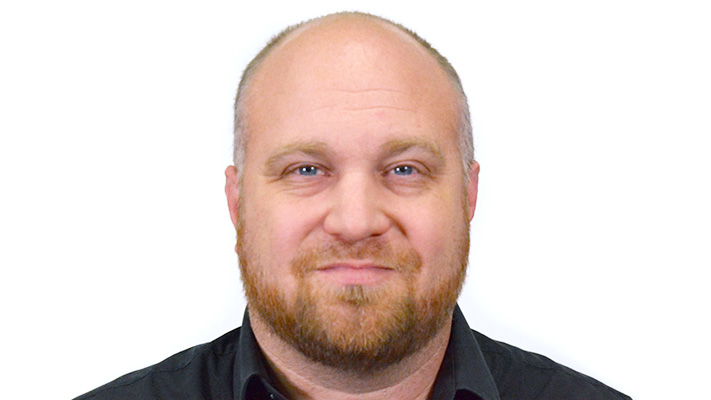
Peter Natale
Peter Natale is a JUNO-nominated songwriter and producer from Toronto who has collaborated with renowned artists including Nick Carter, Adina Howard, God Made Me Funky, and Jully Black. In 2016, he co-founded Sun Dragon Creative, where he is actively developing innovative music plugins focused on enhancing workflow and creativity for modern producers. Today, he brings that same passion and industry insight to his role as an Account Manager at Music Marketing, where he partners with some of the most forward-thinking music software brands, helping drive growth and connect cutting-edge tools with creators around the world.