AI-Powered Music: Why Musicians Should Lean In, Not Run Away
- by Peter Natale
- From The Producer's Desk
AI-Powered Music: Why Musicians Should Lean In, Not Run Away
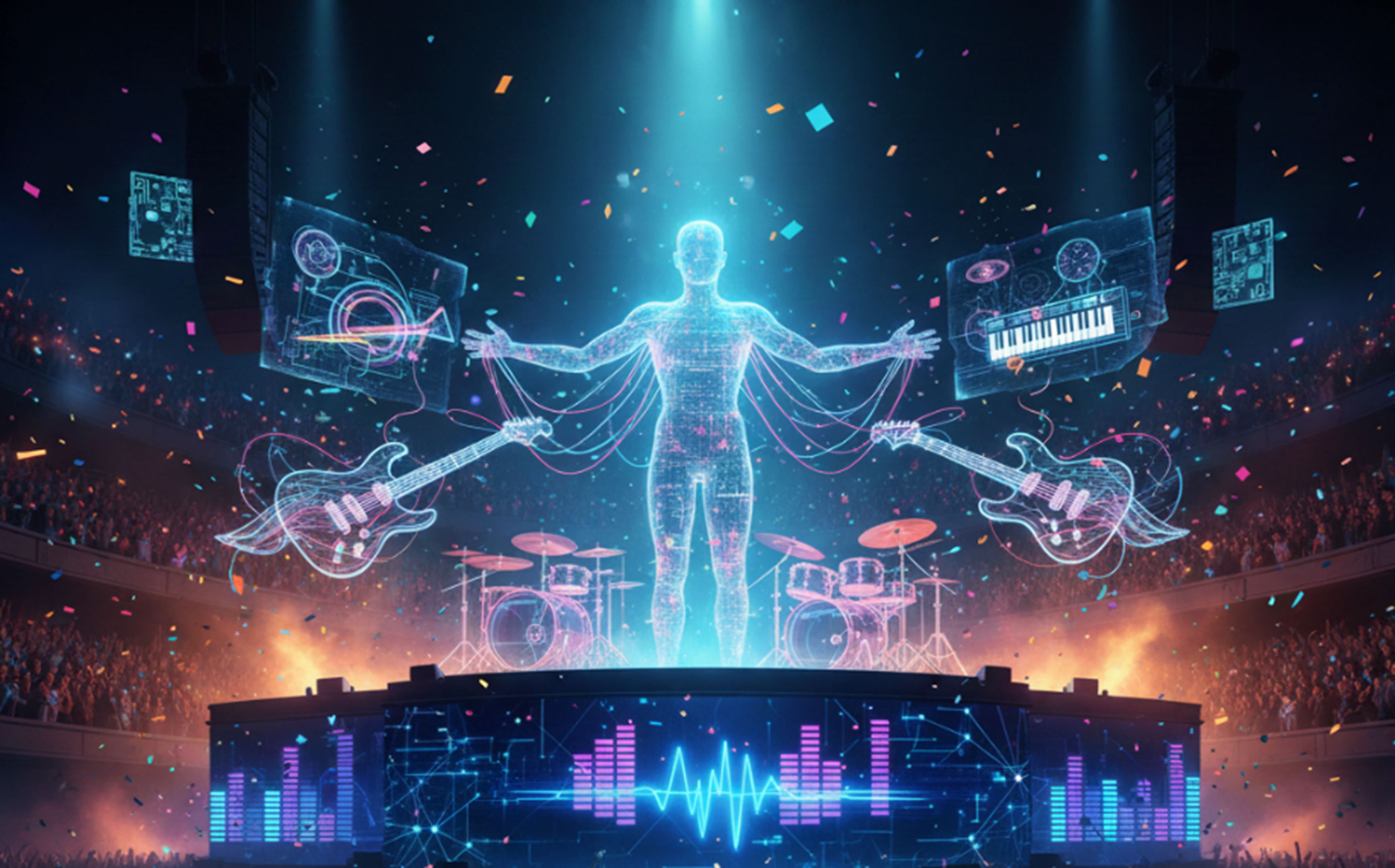
Every major leap in music technology has arrived with doubt trailing behind it.
Electric guitars were once blamed for destroying “real” musicianship. Synthesizers were treated as imposters. Digital audio workstations were accused of lowering standards. Sampling was branded as cheating. And today, the new target is AI.
AI-powered music software is showing up everywhere. Tools that suggest chords, clean up audio, master mixes, generate rhythm ideas, help with lyrics, organize recordings, and even support marketing. For many musicians, the instinctive question becomes: Is this the beginning of the end? Will AI replace the artist entirely? The honest answer is simpler, and far more empowering:
AI isn’t here to replace musicians, it’s here to remove friction, enhance imagination, and give artists back precious time.
Let's go deeper.
AI Isn’t the Artist, The Human Still Leads
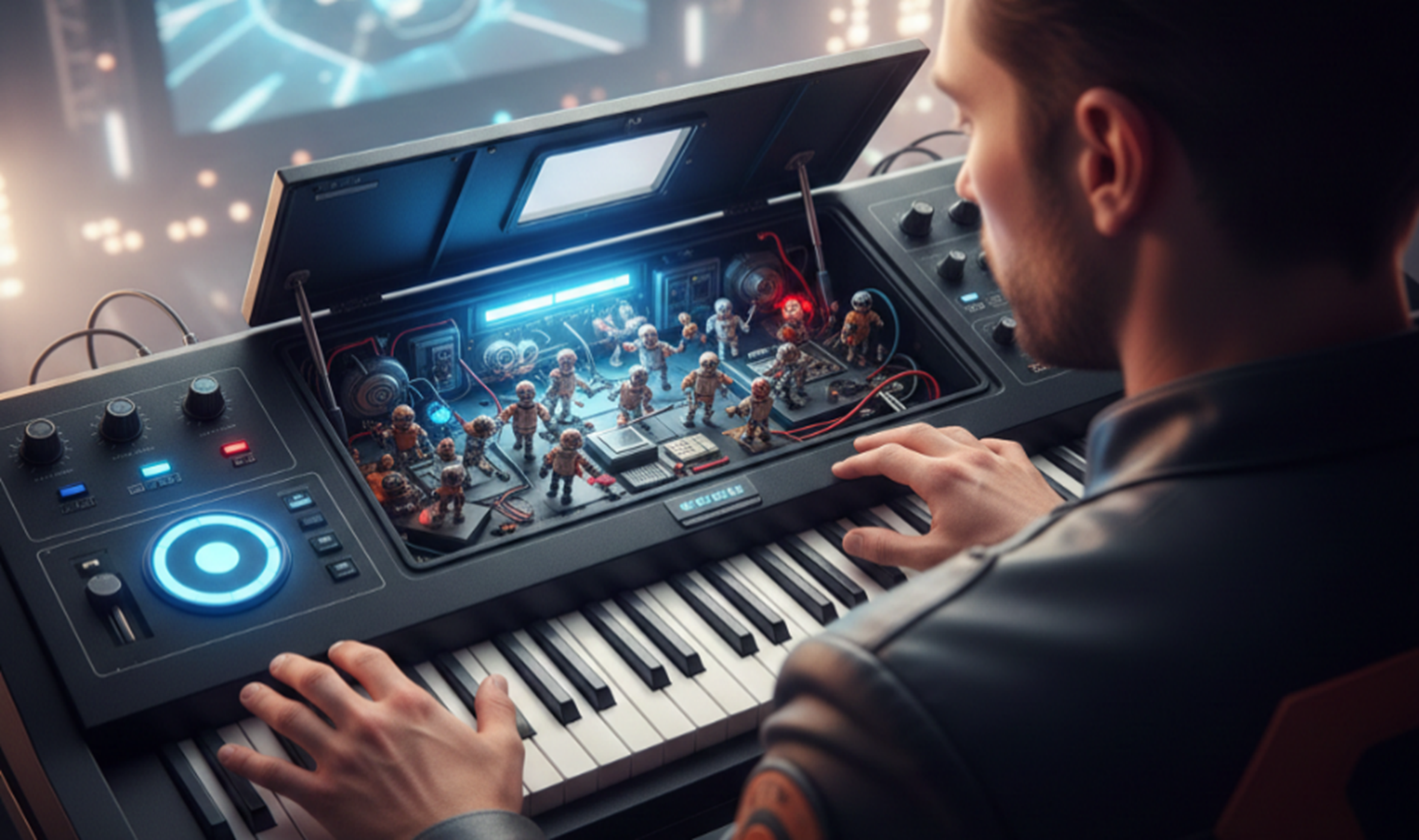
One of the biggest misunderstandings around AI is the idea that it creates for you.
In reality, good AI tools act much more like collaborators, like having an assistant engineer, a helpful producer, or a second set of ears nearby. AI doesn’t carry your experiences, heartbreaks, cultural background, or dreams. It doesn’t know why you care about a song, or what it means to you when someone connects with your music.
Music is still human expression. AI just becomes another instrument, another extension of your creativity, much like MIDI controllers, samplers, synths, or looping pedals once were when they first appeared.
We’ve already embraced technology that “helps” us make music. Quantizing rhythms, tuning vocals, referencing other mixes, and using loops were all controversial once. Today, nobody questions them. AI is simply the next chapter in that same story.
Taking the Pain Out of the Work Musicians Don’t Love
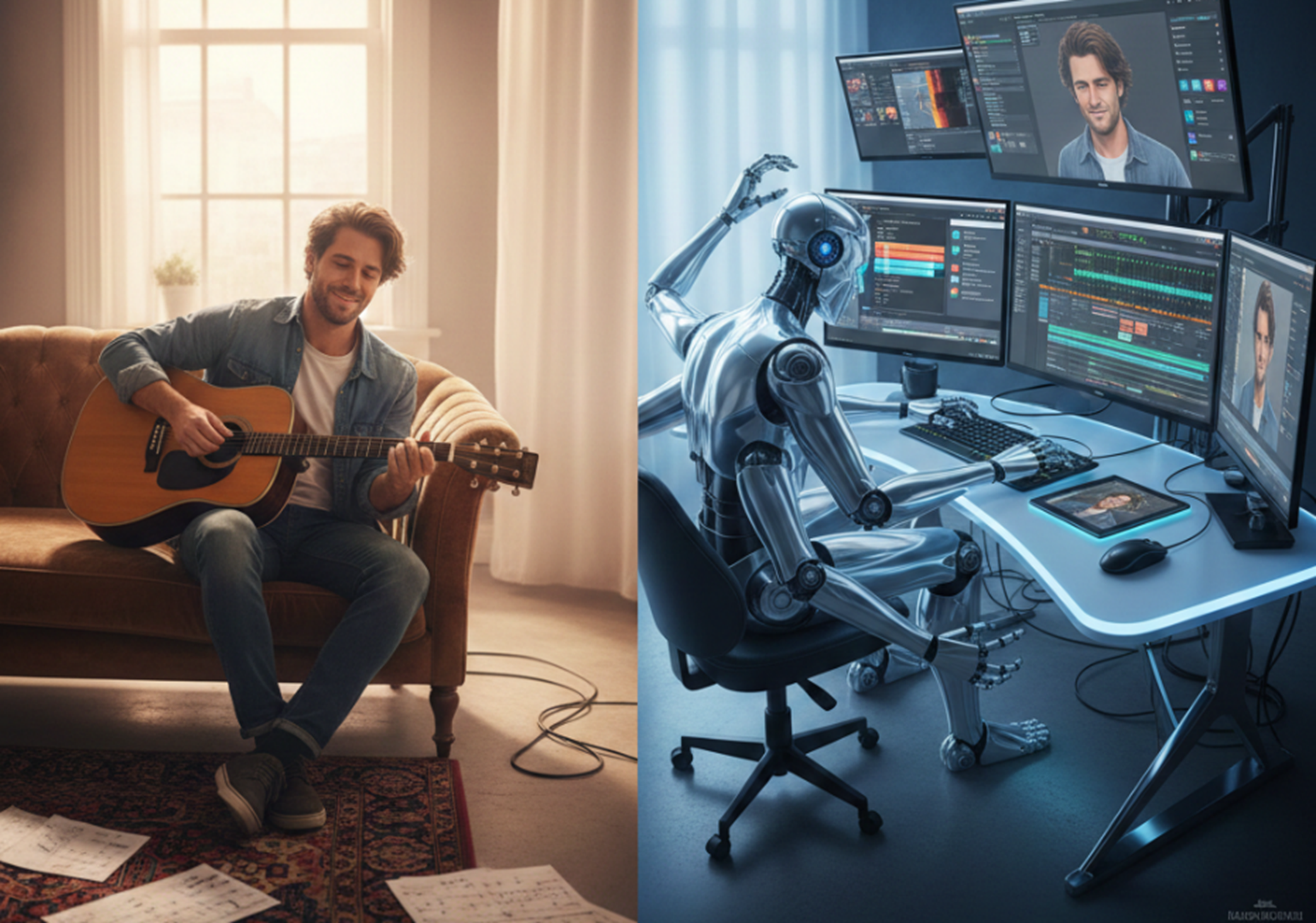
Most musicians don’t struggle because they lack ideas. They struggle because everything surrounding the creative process becomes heavy, technical, and time-consuming.
AI tools are already easing those burdens. Instead of spending hours cleaning up noise, isolating vocals, repairing messy timing, or constantly troubleshooting mixes, AI can handle much of the cleanup, leaving musicians inside the creative headspace rather than constantly pulled back into repair mode.
The same applies to writing. AI can nudge a stuck melody forward, suggest a harmonic twist you may not have thought of, or offer a different arrangement path when a song feels stale. It’s not handing you a finished song, it’s giving you sparks. You still rewrite, sculpt, reject, reshape, and make it yours.
And then there’s the endless administrative side of music. Exporting versions, labeling files, creating artwork mockups, organizing takes, writing descriptions, resizing content… tasks that slowly drain creative momentum. AI reduces the friction so artists spend less time wrestling with logistics and more time actually making meaningful work.
AI Can Expand Originality Instead of Shrinking It
A common fear is that AI will make everything sound generic and lifeless.
That happens only when people let the tool decide everything.
When musicians experiment, feeding AI unusual references, blending its outputs with live instruments, twisting results with effects, reharmonizing suggestions, or even intentionally breaking what it offers, the results become surprisingly personal. AI can show you roads you may never have taken, but you still choose which direction to walk.
Originality disappears not because of tools, but because of complacency. Artists who treat AI as a sandbox for exploration often discover new corners of their creativity they didn’t know existed.
The Hidden Advantage: Time to Grow and Reach People
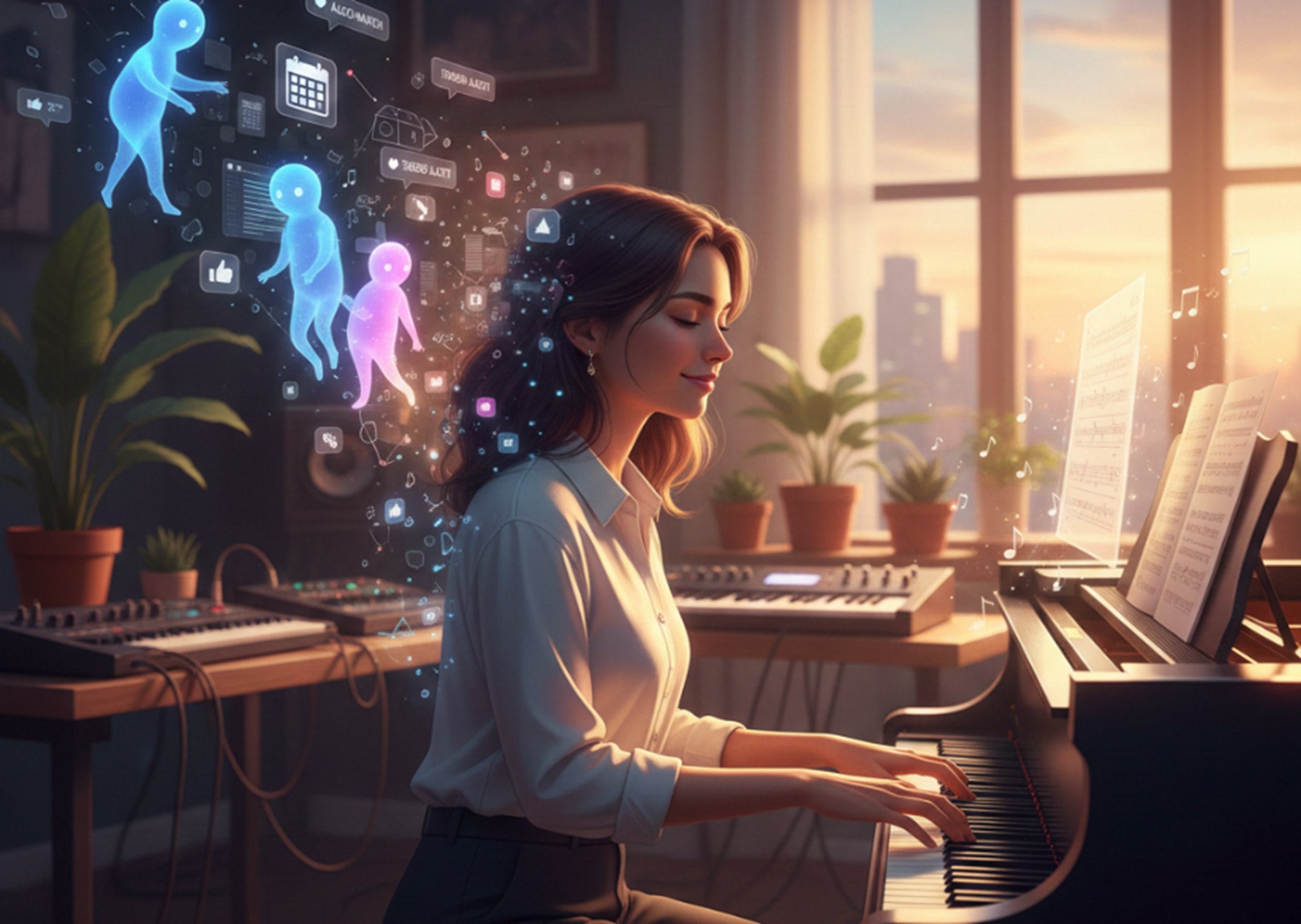
Here’s where AI becomes transformative in a way that goes beyond music itself.
Today, making great music is only half the job. Artists also need to build presence, communicate regularly with fans, release content consistently, navigate algorithms, pitch songs, analyze results, and stay visible. For many musicians, this is where burnout starts.
AI can help generate thoughtful captions, organize promotional timelines, turn one piece of content into several versions, analyze trends, and offer creative ideas for engaging listeners, freeing artists from the grind of always feeling behind.
When the busywork shrinks, what replaces it isn’t laziness. It’s space.
- Space to write better songs.
- Space to connect with listeners.
- Space to think like an artist again, instead of a stressed-out social media manager.
Technology Has Always Sparked Growth, Not Extinction
History keeps repeating the same pattern.
Recording didn’t destroy live music, it expanded the industry. Synthesizers didn’t eliminate orchestras, they created entirely new genres. DAWs didn’t kill studios, they opened the door for more creators.
AI is another wave in that long evolution. It can democratize access, speed up learning, and lift creative ceilings, if musicians choose to learn it rather than fear it.
The Artists Who Thrive Will Be the Ones Who Stay Curious
Avoiding AI isn’t an act of artistic purity; it’s simply an artificial limitation.
The musicians who benefit most will be the ones who treat AI as a professional ally, a powerful assistant that helps them create faster, explore deeper, and redirect reclaimed time toward performance, storytelling, and audience building, while keeping human emotion at the center.
The truth is simple: AI doesn’t threaten creativity. It threatens excuses.
Final Thought: The Heart of Music Remains Human
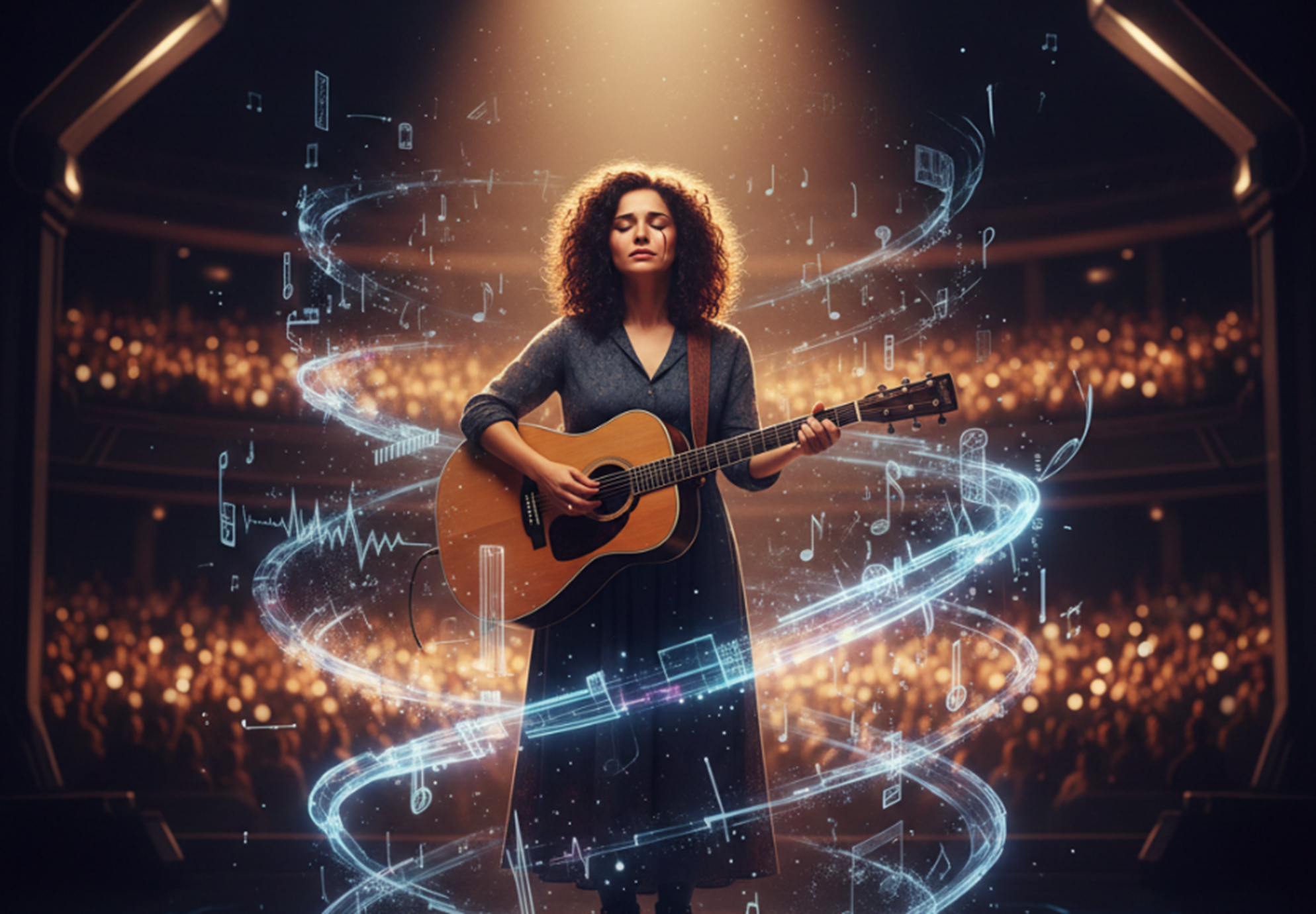
AI cannot replace the story behind a song, the connection between artist and listener, or the feeling of performing something deeply personal.
The future belongs to musicians who combine curiosity with craft, those who use new tools boldly while staying grounded in emotion, authenticity, and integrity.
Don’t run from the future. Learn it. Shape it. Bend it to your vision.
Because the artists who embrace technology don’t vanish. They lead.
Author

Peter Natale
Peter Natale is a Juno nominated songwriter/producer from Toronto who has worked with artists such as Nick Carter, Adina Howard, God Made Me Funky and Jully Black. In 2016 he co-founded Sun Dragon Media and is currently developing music plugins designed to improve musician’s workflow. He spends most of his time working as a brand manager for Music Marketing managing some of the biggest and brightest music software companies that create the most cutting-edge products available.