From Boxes to Bytes: How Digital Music Software Helped the Planet
- by Peter Natale
- From The Producer's Desk
For decades, buying music software meant buying a box. Not music, not creativity, not inspiration, a literal cardboard-and-plastic box. Inside that box was a serial number, some packaging, maybe a CD, a manual, and layers of plastic. That box traveled further than most people travel in a lifetime before it ever reached the musician who bought it.
And we rarely stopped to ask:
What did all of that cost the planet for something that ultimately lived on a computer?
Today, the industry is changing. Digital delivery isn’t just faster and more convenient, it’s one of the quiet environmental success stories in music technology. And it’s exactly the kind of change Green Musicians exists to accelerate.
The journey of a single serial number (before digital delivery)
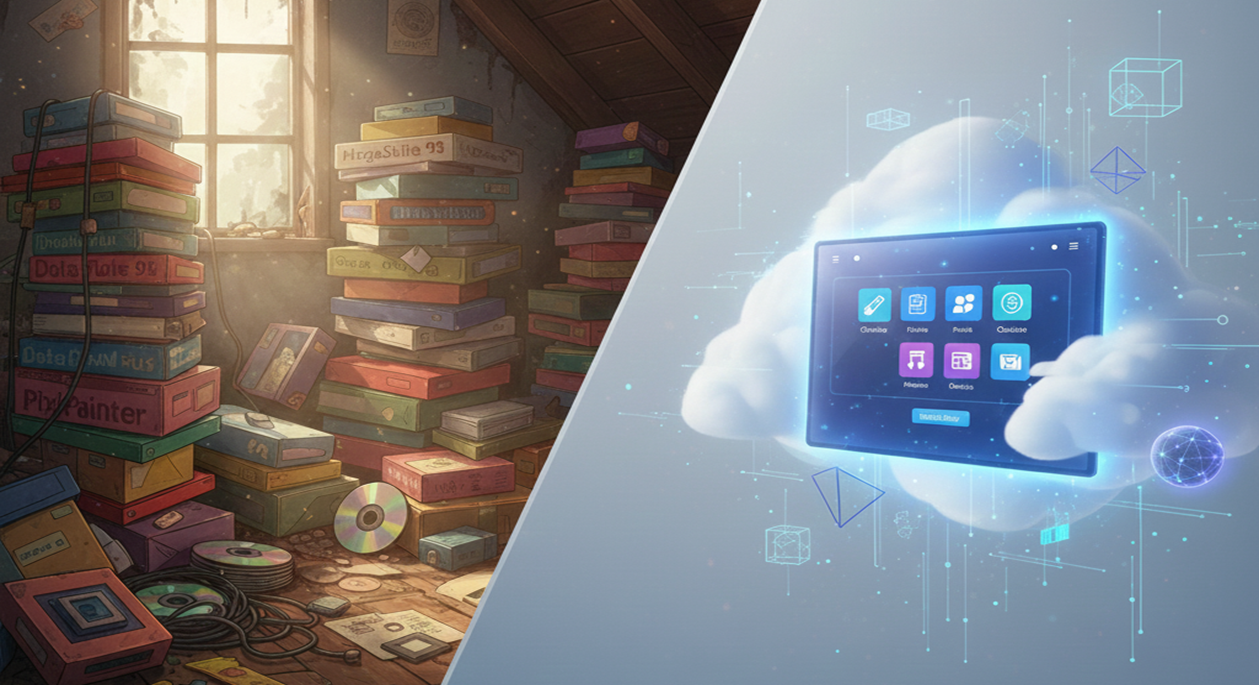
Before digital downloads, here is what had to happen just so a musician could install their new software:
- 1. A serial number was generated on a developer’s computer.
- 2. That number was printed onto a cardstock insert.
- 3. The insert went into a small box.
- 4. The box was shrink-wrapped in plastic.
- 5. Dozens of those boxes went into a larger shipping carton.
- 6. A label was printed, applied, scanned, and processed.
- 7. The cartons were stacked onto pallets.
- 8. The pallets were loaded into trucks and shipped to an airport.
- 9. They were flown thousands of kilometers to another country.
- 10. They arrived at a warehouse, were unpacked, scanned, and reshelved.
- 11. Distributors shipped them again to retail stores.
- 12. Stores unpacked, shelved, displayed, and waited.
- 13. A customer drove to the store, bought the box, drove home…
- 14. …opened everything, threw away most of it, and finally installed the software.
A digital product, wrapped in layers of fuel, ink, plastic, cardboard, logistics, and waste.
What the old system really looked like (by the numbers)
Let’s use an example: imagine 2 million boxed copies of a popular DAW sold in a year.
The environmental picture becomes staggering:
- 📦 Boxes stacked: 1,110 km tall, more than twice the distance from Earth to the International Space Station.
- 🟫 Cardboard inserts spread out: 458,150 square meters, enough to cover all of Vatican City..
- 📚 A 92-page manual in every box, total pages long enough to trace the border of Brazil.
- 📦 125,000 shipping cartons stacked, 3.6 times taller than Mount Everest.
- 💿 CD sleeves laid side-by-side, 254 km, about the distance from London to Manchester.
- 🌳 48,014 trees used for all the paper and cardboard.
- 🖨 22,004 liters of ink printed into packaging, labels, and books.
- 🚢 131 shipping containers required just to move boxes.
- 🗑 And ultimately, over 453,592 kilos worth of cumulative waste created.
All for software that, ironically, could have been downloaded in seconds.
And then everything changed
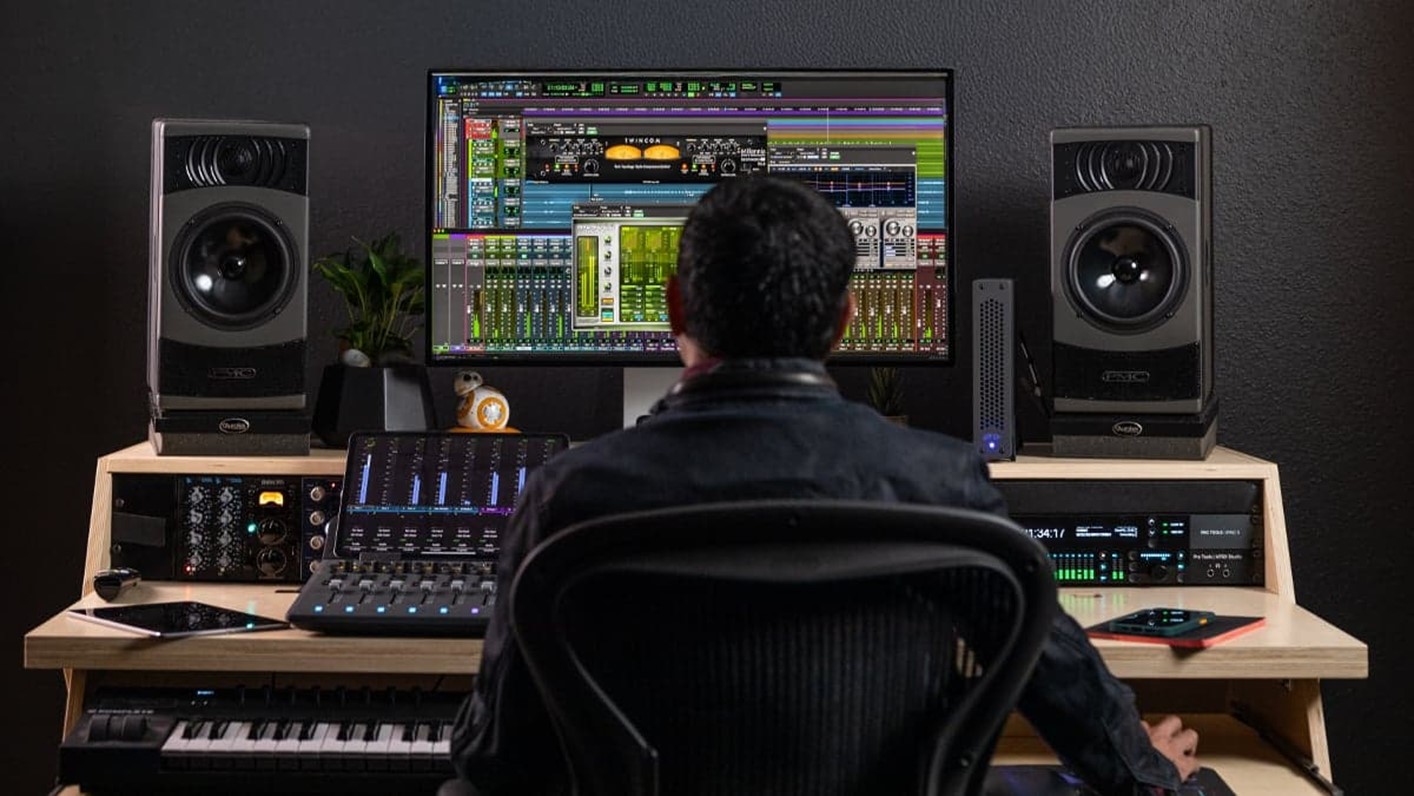
Digital delivery didn’t just make buying faster. It erased nearly all of that wasteful infrastructure.
Today:
Where Resellers fit in
- You buy from a retailer online.
- You receive your code instantly.
- You download the installer.
- You’re making music within minutes.
- No boxes. No pallets. No flights. No trucks. No shrink wrap. No landfill.
The impact of this shift is massive and it keeps improving as more companies choose digital-first distribution.
This is why Resellers are such a strong advocate for digital-first music software.
We see digital delivery as one of the most practical, immediate ways the music world can cut waste without sacrificing creativity, quality, or access. When developers choose digital, when retailers lead with download options, and when musicians choose not to buy something wrapped in layers of plastic, the impact compounds year after year.
Because the greener the industry becomes, the more sustainable music can be for decades to come.

The move to digital delivery isn’t just a convenience story, it’s an environmental tipping point.
If the industry continues replacing physical boxes with digital downloads at scale, the ripple effect over the next decade is enormous:
- millions of trees left standing instead of pulped for packaging
- hundreds of millions of plastic sleeves, wraps, and discs avoided
- fewer shipping containers on oceans and fewer trucks on highways
- dramatically reduced CO₂ emissions across the entire supply chain
- less landfill and microplastic pollution for future generations
The future: creativity with the smallest footprint possible
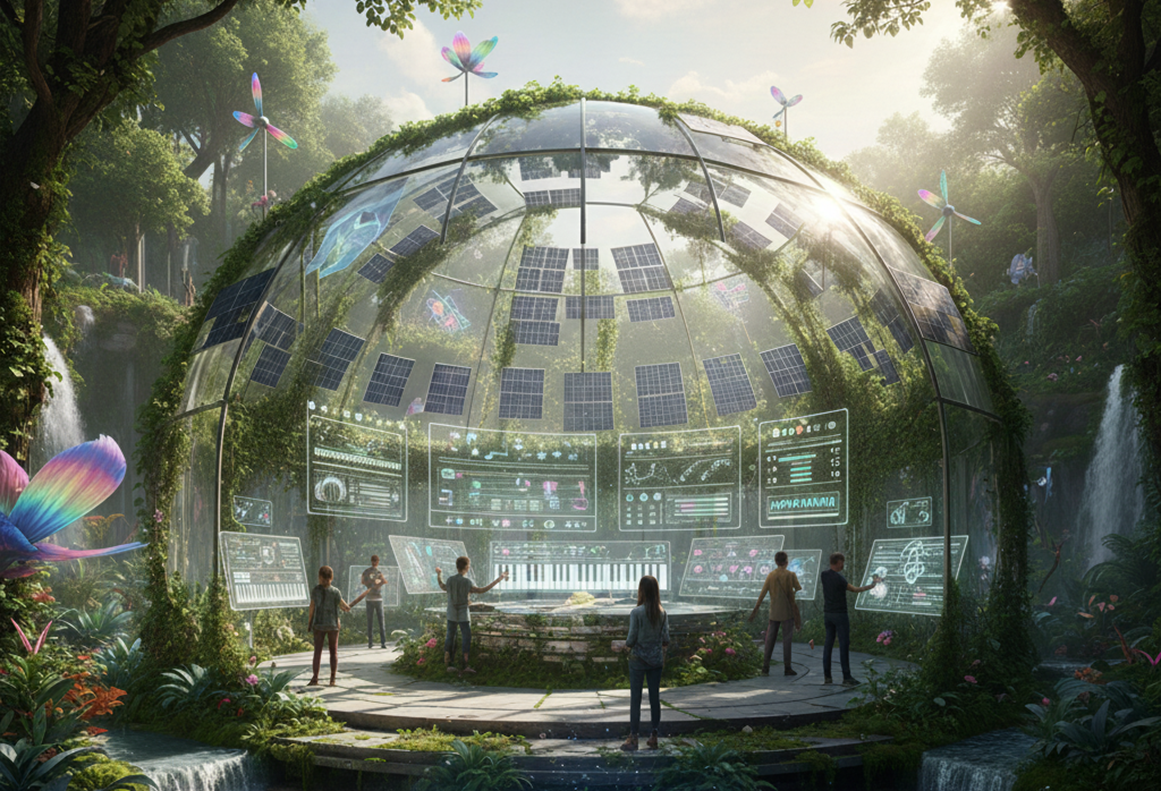
Imagine an industry where creating music leaves almost nothing behind.
No boxes. No unnecessary printing. Minimal shipping. Minimal waste. Maximum inspiration.
That’s the future we believe in.
As technology evolves, the environmental footprint of music tools can shrink even further:
- installers that are lighter, faster, and more efficient
- licensing systems that eliminate paperwork entirely
- cloud-based tools reducing the need for physical media
- greener data centers powered by renewable energy
- transparent sustainability practices across developers and retailers
Our commitment is simple: champion solutions that let musicians make incredible music while putting the smallest possible burden on the planet.
Because the songs we make today shouldn’t come at the expense of the world our children will live in tomorrow.
Author

Peter Natale
Peter Natale is a Juno nominated songwriter/producer from Toronto who has worked with artists such as Nick Carter, Adina Howard, God Made Me Funky and Jully Black. In 2016 he co-founded Sun Dragon Media and is currently developing music plugins designed to improve musician’s workflow. He spends most of his time working as a brand manager for Music Marketing managing some of the biggest and brightest music software companies that create the most cutting-edge products available.