Waves, The Company That Turned Hardware Culture Into Software
- by Peter Natale
- Under The Hood
You Know the Name. But Not the Full Story.
If you zoom out far enough, modern music production starts to look less like software and more like a translation of the physical studio into a digital environment.
And few companies shaped that translation more directly than Waves Audio.
Not just because they built popular plugins, but because they helped define what a plugin is, how it behaves, and how producers think about mixing inside a DAW.
The Moment the Plugin Era Really Started
Before plugins became a marketplace, they were barely a concept. In the early 1990s, digital audio workstations were still closed systems. Processing tools were either built directly into the system or lived in expensive external hardware units outside the computer.
Then in 1992, Waves released the Q10 Paragraphic Equalizer.
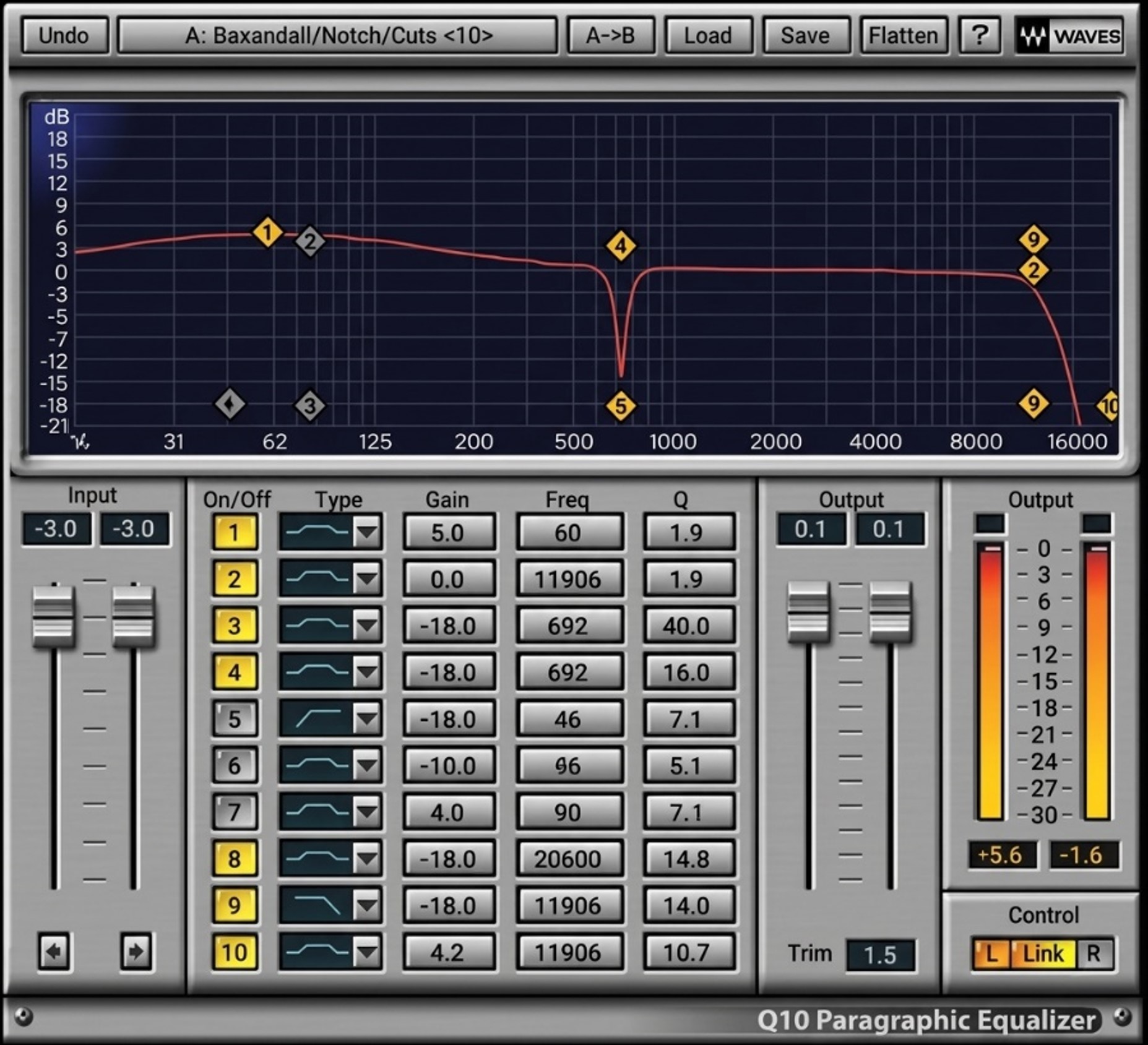
It is widely recognized as one of the first third-party audio plugins ever created for a digital audio workstation, meaning it wasn’t built by the DAW manufacturer, but by an independent company designing tools to run inside the software ecosystem.
That mattered more than it looks on the surface. Because it introduced something that is now completely normal: Audio processing doesn’t have to be fixed inside a system, it can be expanded through external developers.
From that point on, the idea of installing new studio tools inside your computer stopped being unusual and started becoming the foundation of the entire plugin industry.
Waves Didn’t Just Build Plugins, They Modeled Hardware Culture Into Software
Waves’ deeper impact wasn’t only technical. It was conceptual. Instead of treating digital processing as abstract algorithms, Waves leaned heavily into something producers already understood:
the physical recording studio.
So rather than building purely mathematical interfaces, they designed plugins that behaved like familiar studio gear:
- console-style EQs and compressors
- rack-unit inspired layouts
- analog-modeled signal behavior
- workflows that mirrored hardware signal chains
This wasn’t just design, it was translation. They effectively turned a DAW into something that felt like sitting in a studio. And that changed how producers approached mixing. Instead of thinking “What digital process do I need?” they started thinking “What piece of gear, or what studio workflow gets me that sound?” That shift is a big reason Waves’ “signature” plugins became so influential. Tools branded around engineers and console styles didn’t just process audio, they represented entire sonic identities.
The Ripple Effect on Modern Production
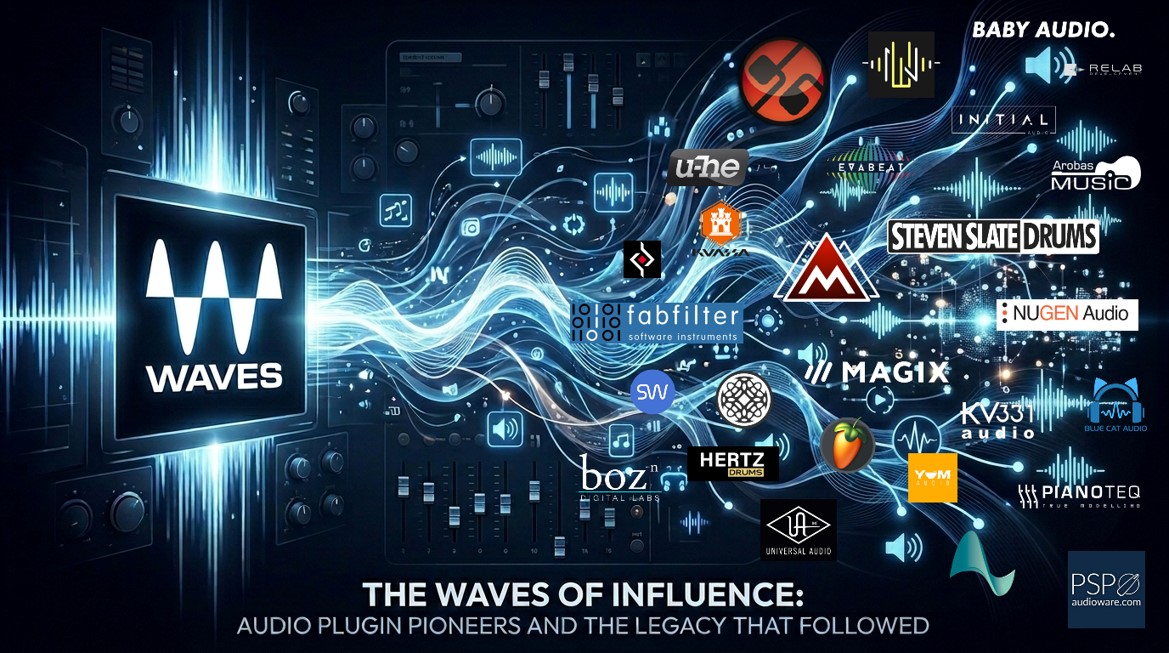
Once Waves proved that hardware culture could be successfully recreated inside software, the entire industry followed.
Plugin design increasingly moved toward:
- emulating real-world studio gear
- prioritizing workflow over raw technical controls
- packaging sound around recognizable studio “characters” and styles
Today, that approach is everywhere, from boutique developers to major DAW ecosystems.
Even the expectation that a DAW should feel like a virtual studio, with racks, consoles, and outboard-style processing can be traced back to this shift.
Reimagining the Past for a New Generation
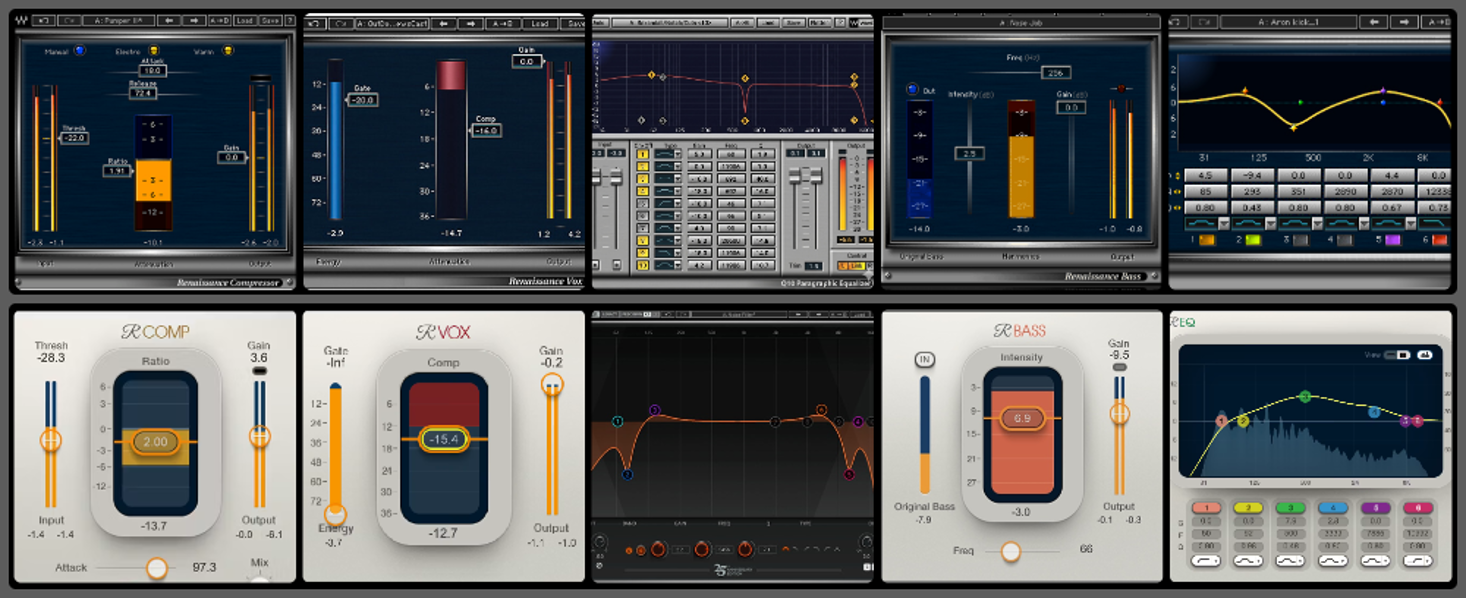
In recent years, Waves has also started revisiting its own history, updating and redesigning many of its classic plugins with a more modern visual and workflow approach. Rather than letting early-era interfaces and designs age out, they’ve been progressively refreshing older, foundational tools to better match today’s production environment.
On the surface, it looks like a UI update. But underneath it’s something more strategic: It’s a way of reintroducing foundational studio concepts to a new generation of producers who never experienced the original hardware or early plugin era.
For newer users, these updated plugins don’t feel like “legacy tools.” They feel like modern production staples, even though many of them are direct descendants of some of the earliest building blocks of the plugin world.
In that sense, Waves isn’t just maintaining its catalog. It’s actively re-contextualizing its history so that the ideas that helped shape digital audio in the first place remain accessible, usable, and relevant inside today’s workflows.
The Legacy
Waves didn’t just participate in the plugin revolution. They helped define its foundation.
With early innovations like the Q10 EQ and a design philosophy that translated analog studio culture into software, they helped establish a new creative reality:
- studios no longer had to exist in physical rooms
- gear no longer had to exist as hardware
- and mixing could be built entirely inside a computer while still feeling like a traditional studio workflow
And that mindset is still embedded in almost every modern production session today.
Author
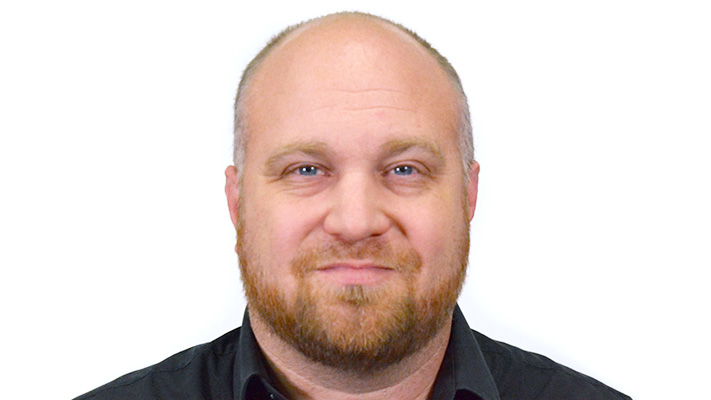
Peter Natale
Peter Natale is a JUNO-nominated songwriter and producer from Toronto who has collaborated with renowned artists including Nick Carter, Adina Howard, God Made Me Funky, and Jully Black. In 2016, he co-founded Sun Dragon Creative, where he is actively developing innovative music plugins focused on enhancing workflow and creativity for modern producers. Today, he brings that same passion and industry insight to his role as an Account Manager at Music Marketing, where he partners with some of the most forward-thinking music software brands, helping drive growth and connect cutting-edge tools with creators around the world.